
What Are DiSC Styles?
The DiSC model identifies four behavior styles: D – Dominance (decisive, results-focused), i – Influence (social, persuasive), S – Steadiness (patient, supportive), and C – Conscientiousness (detail-oriented, analytical). It helps improve communication, teamwork, leadership, and self-awareness by understanding how people work and interact.
Everything DiSC® Disc Styles
Every organization is powered by people, and people bring various ways of thinking, reacting, and collaborating to work. Everything DiSC® takes those differences and makes them a strength by helping you understand disc styles and how they show up in day-to-day behavior.
Everything DiSC by Wiley is built on a simple yet powerful disc model to help participants recognize their styles, understand others’ styles, and have more effective interactions. Rather than guessing why people behave in a certain way, teams learn to use the common language of behavior that makes communication clearer and relationships stronger.
The Everything DiSC® Model Behind Disc Styles
DiSC is one of the most popular behavioral tools in the world, used for improving collaboration, leadership, and team performance. It’s based on a four-quadrant disc model that describes how people tend to behave at work:
- Dominance (D)
- Influence (i)
- Steadiness (S)
- Conscientiousness (C)
Everything DiSC® applies this classic disc model to the needs of the modern workplace. With its research-validated disc assessment, it produces an in-depth disc profile that explains an individual’s primary disc style, priorities, and how he or she usually responds to challenges, people, pace, and procedures.
Gaining insight into disc styles provides a powerful framework through which to decode behavior and lift the manner in which your people work together, as an HR leader, L&D professional, people manager, or cross-functional team member.
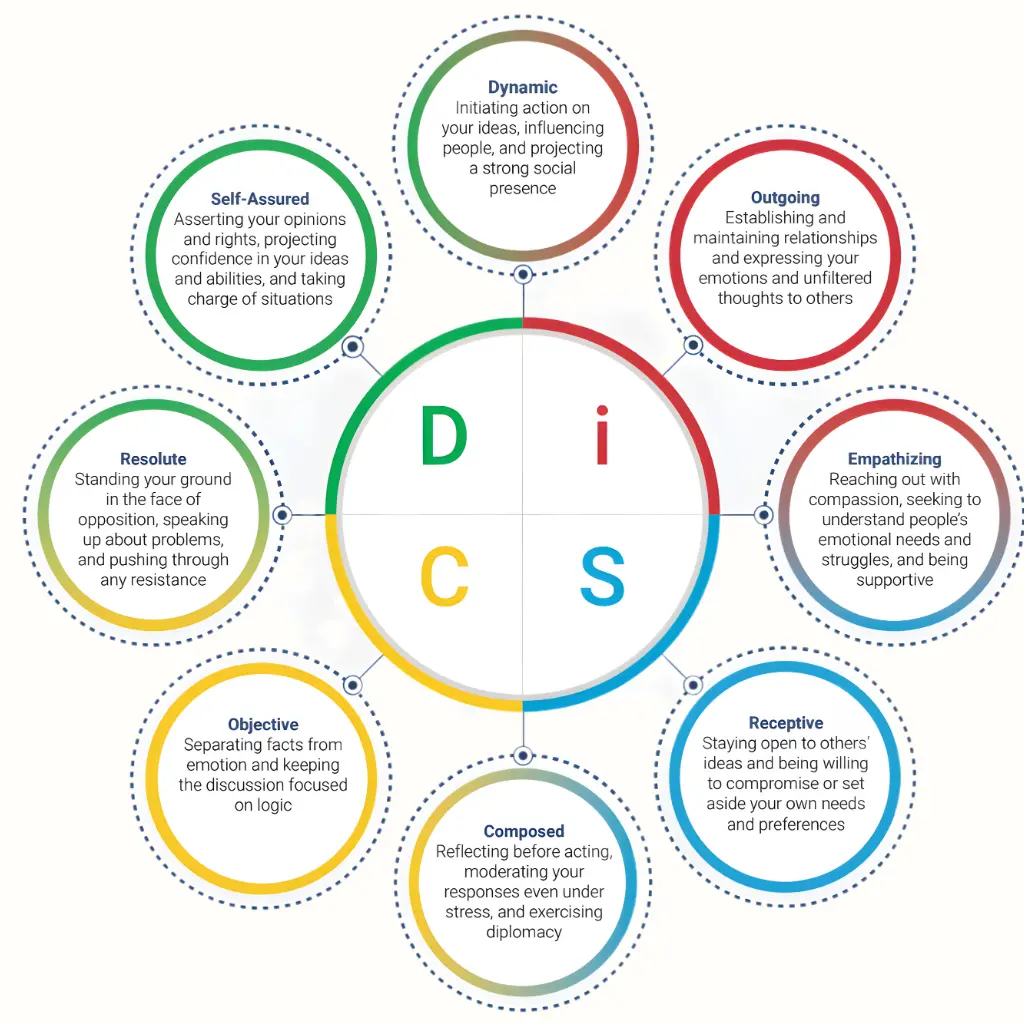
What Are Disc styles?
When discussing disc styles, we refer to four broad behavior patterns that describe how people tend to communicate, make decisions, and respond under pressure. There is no good or bad disc style since each reflects a different set of priorities and preferences. The four core disc styles are:

Dominance (D)
Direct, result-driven, action-oriented

Influence (I)
Social, persuasive, enthusiastic

Steadiness (S)
Patient, calm, collaborative

Conscientiousness (C)
Analytical, precise, quality-focused
Most of the people are a blend of more than just one disc style, and your disc profile shows how strongly each of these styles is represented in your behavior. Each of these disc styles has its own strengths and weaknesses.
Who is Everything DiSC Workplace For?
Whether you’re in HR working on top talent development or leading teambuilding workshops, the tool meets you where you are.
How Disc Styles Blend in Real Life
Very few people are purely one-disc style. Most Everything DiSC disc profiles show a blend such as Di, iS, SC, or CD. These blended disc styles explain nuances like:
- A D style that is also people-focused (Di)
- An S style that appreciates structure (SC)
- An i style that is more thoughtful and reserved (iS)
By viewing behavior as a combination of disc styles, the disc model captures the complexity of real people while keeping the framework simple enough to apply in daily work. This is one of the reasons the DiSC approach has become so popular for leadership and team development.
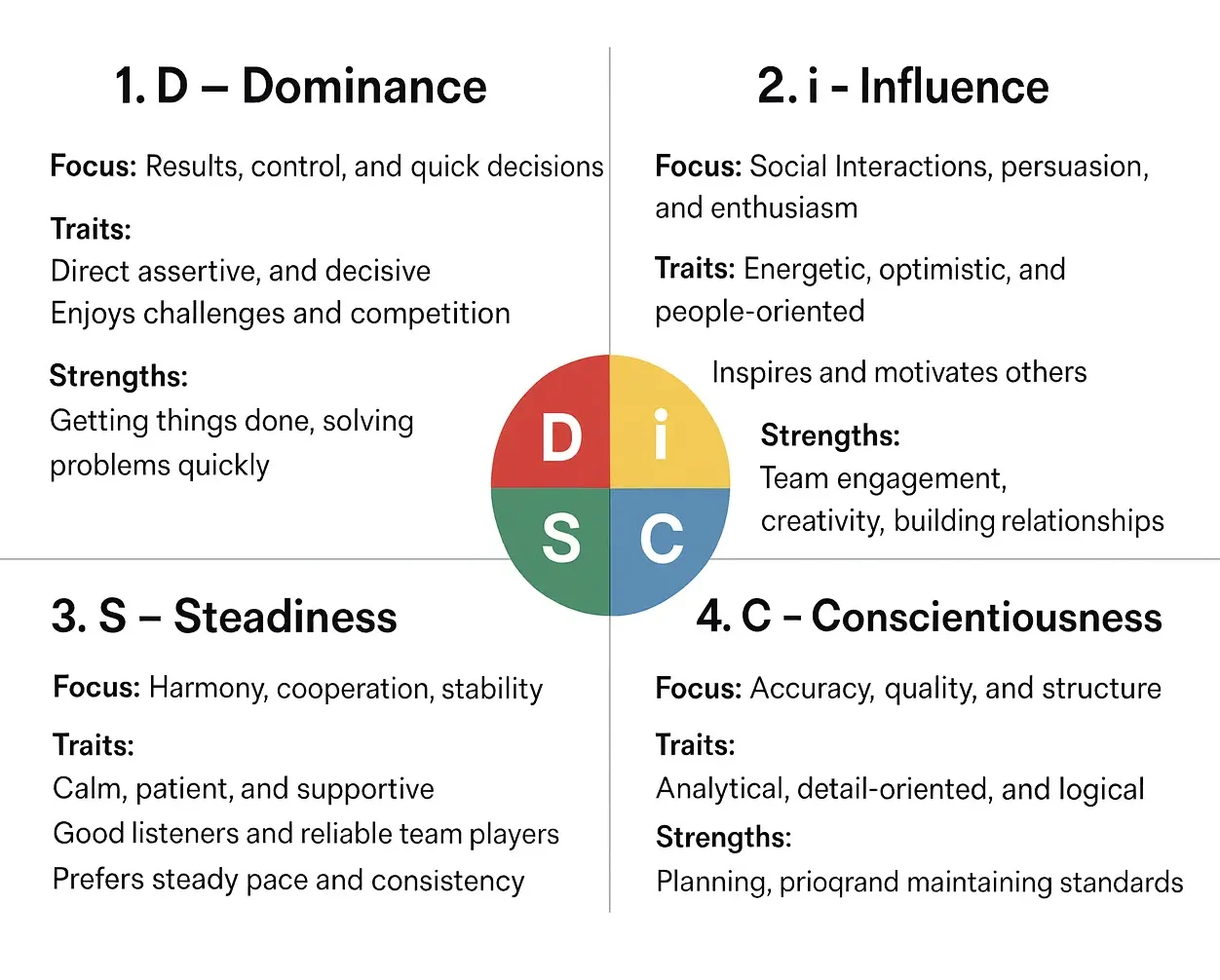
A Closer Look at the Four Disc Styles
Dominance (D) – Driving Results
The Dominance disc style is fast-paced, direct, and strongly focused on getting things done. People with a strong D in their disc profile tend to:
- Act quickly and decisively
- Challenge ideas and push for improvement
- Prefer autonomy, control, and clear outcomes
- Be comfortable with risk and competition
They can sometimes appear blunt or impatient, especially in high-pressure situations. When working with this disc style, it helps to:
- Be concise and to the point
- Focus on goals, results, and bottom-line impact
- Respect their time and need for efficiency
In leadership roles, the Dominance disc style often drives change, sets bold targets, and pushes teams to achieve ambitious goals.
Influence (i) – Inspiring Others
The Influence disc style is people-focused, energetic, and expressive. Individuals with a strong i in their disc profile often:
- Build relationships quickly
- Motivate others with enthusiasm and positivity
- Enjoy collaboration, brainstorming, and social interaction
- Prefer open, informal communication
At times, they may overlook details or struggle with highly structured environments. To collaborate effectively with this disc style, it helps to:
- Create space for conversation and idea-sharing
- Acknowledge their contributions and energy
- Balance enthusiasm with clarity on next steps and commitments
In teams, the Influence disc style boosts morale, advocates for people, and ensures that relationships remain at the heart of the work.
Steadiness (S) – Supporting Stability
The Steadiness disc style is calm, patient, and reliable. People with a strong S in their disc profile generally:
- Value harmony, cooperation, and long-term relationships
- Prefer predictable, stable environments
- Offer consistent support to colleagues and customers
- Listen carefully and seek to understand others
They may be uncomfortable with rapid change or high conflict. When working with this disc style, it’s important to:
- Provide reassurance and clarity during transitions
- Give time to process information and make decisions
- Show appreciation for their loyalty and dependable contributions
In organizational life, the Steadiness disc style is often the glue that holds teams together, fostering trust and continuity.
Conscientiousness (C) – Ensuring Quality
The Conscientiousness disc style is analytical, detail-oriented, and careful. A disc profile high in C usually reflects someone who:
- Values accuracy, logic, and quality standards
- Prefers structured processes and clear expectations
- Takes time to analyze data before making decisions
- Spots risks, inconsistencies, and potential issues early
They can be perceived as cautious or critical if their focus on quality isn’t understood. To work well with this disc style, it helps to:
- Provide data, facts, and clear reasoning
- Allow time for preparation and analysis
- Acknowledge their expertise and thoroughness
In complex, regulated, or technical environments, the Conscientiousness disc style is essential for maintaining standards and reducing errors.
How the Disc Model Powers Everything DiSC®
Everything DiSC® uses the disc model as its foundation but goes further by combining assessment, personalized feedback, and application-based learning. Participants begin with a validated disc assessment, and then receive an in-depth disc profile that:
- Maps their core disc style on the DiSC circle
- Highlights their priorities and stressors
- Describes how they tend to react under pressure
- Offers strategies for working with other disc styles
This combination of the disc model plus rich, workplace-relevant insights makes the experience practical and memorable. Employees don’t just read about their disc style—they immediately see how it affects real conversations, meetings, and projects.
Explore Our Interactive Everything DiSC® Public Programs
- Learn how to facilitate Everything DiSC®
- Gain insights to strengthen team collaboration and leadership
- Earn a recognized certification and expand your professional toolkit
Why Disc Styles Matter in Modern Organizations
In today’s workplace, teams are more cross-functional, virtual, and diverse than ever. Technical skills may get you in the door, but disc styles often determine how effectively people can collaborate and lead. Understanding the disc model helps organizations:
- Decode team dynamics and reduce friction
- Design leadership programs that account for different disc styles
- Support managers in adapting their approach to each team member
- Build cultures where behavioral differences are seen as assets
HR and L&D teams use DiSC to shape onboarding, performance conversations, talent reviews, and succession planning. When people understand their disc style and others’ disc styles, they can communicate with more intention and empathy.
Get Started with Everything DiSC® Workplace
Whether you need individual profiles, team workshops, or enterprise-wide deployments, our experts help you design and implement the right solution.
Frequently asked questions
The disc model describes four primary behavioral patterns: Dominance, Influence, Steadiness, and Conscientiousness. Each disc style describes a person's preferred ways of communicating, making decisions, handling problems, and responding to the pace and structure. Understanding disc styles is an essential component in giving people a simple, shared language to describe behavior without making judgments about it. When teams understand the different styles, they will minimize misunderstandings, communicate in ways that others appreciate, and work together more effectively. For organizations, using disc styles through an Everything DiSC disc profile fosters better collaboration, stronger relationships, and more emotionally intelligent leadership.
The disc model arranges behaviors into four quadrants: Dominance, Influence, Steadiness, and Conscientiousness. Each of the DiSC styles combines a preference for one of the two dimensions: pace, which is either fast or moderate, and priority, which is either task-focused or people-focused. Dominance is direct and results-driven, Influence is outgoing and persuasive, Steadiness is patient and supportive, and Conscientiousness is analytical and quality-focused. An Everything DiSC disc profile maps a person on this disc model and their strength in each style. This then makes it easy to understand why people behave differently, and how to adapt to those differences productively.
Yes, most people have parts of more than one DiSC style. An Everything DiSC disc profile often reveals a primary disc style with secondary influences, such as Di (Dominance + Influence) or SC (Steadiness + Conscientiousness). These blended disc styles explain nuances like being both people-focused and detail-oriented or both calm and results-driven. This is not really about trying to fit people into little boxes but about highlighting patterns that influence how they talk, react under pressure, and make decisions. This blended perspective makes the disc model pragmatic, flexible, and very applicable.
To know your DiSC style, you fill out an online Everything DiSC disc assessment. Depending on how you answer, you obtain a personalized disc profile mapping your behavior onto the disc model. A standard disc profile would include your primary disc style, what your key priorities are at work, how you tend to respond under stress, your natural strengths, and potential blind spots. You also get explanations of how to work with people with different disc styles more effectively. This combination of self-awareness and practical strategies makes the disc profile a potent tool in personal development, teamwork, and leadership.
Understanding DiSC styles lets you be more intentional about how you communicate and collaborate. When you know your own disc style, you can recognize how your natural tendencies are either helping or hurting a conversation-for example, being too direct, too accommodating, too optimistic, or too cautious. When you understand other people's likely disc styles, you can adjust your approach: slow down or speed up, provide more detail or big-picture, focus on relationships or results. Over time, this ability to flex makes meetings smoother, feedback more constructive, and cross-functional projects more successful, strengthening overall team performance and culture.